Nepal disaster: Experts draw comparison to atomic bombs
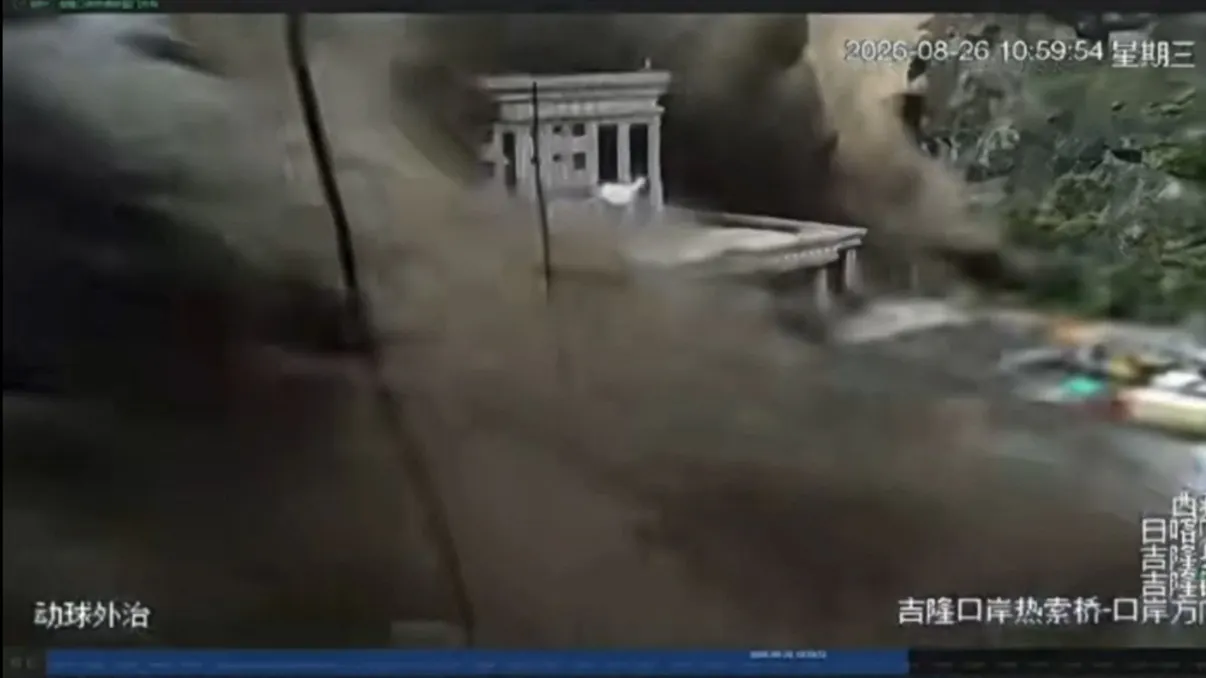
A devastating flash flood in Nepal’s Bhotekoshi Valley killed hundreds and left at least 1,500 people missing. Experts now believe a massive glacier collapse, rather than an earthquake, triggered the disaster.
The disaster is believed to have begun on the northern face of 7,245-meter-high Langtang Lirung. Satellite images and aerial surveys indicate that a section of glacier at around 5,200 meters collapsed between Langtang Lirung and nearby Tsangbu Ri.
Scientists have not yet determined whether the ice broke away naturally or was triggered by a preceding rockfall. Around 30 million cubic meters of ice, rock and other material may have fallen nearly one kilometer before transforming into a powerful mixture of ice, debris and water.
According to Austrian landslide expert Martin Mergili, the resulting mass raced down the valley at speeds of more than 100 kilometers per hour. Experts from Backpirch Weather estimated that the impact had energy equivalent to about 6.3 percent of the Hiroshima atomic bomb explosion.
The impact reportedly pulverized the enormous block of ice and generated a flood wave more than 30 meters high. Packed with glacier water, rocks and mud, the wave entered the Trishuli River and was funneled through Nepal’s steep, narrow terrain, creating a devastating wall of debris and water.
Initial suspicions that an earthquake had triggered the disaster have since been rejected. The United States Geological Survey (USGS) said analysis of long-period seismic waves indicated that the seismic energy was instead produced by a glacier collapse and subsequent debris flow.
The exact source of all the water remains unclear. Experts are also investigating how rapidly falling ice could have contributed to the enormous volume of water. Unlike many similar glacier-related disasters, researchers say there does not appear to have been a glacial lake involved.
The destruction unfolded with terrifying speed. Surveillance footage from the Gyirong / Rasuwagadi border crossing showed buildings, vehicles and people being swept away within seconds. The crossing, located only a few kilometers downstream from the glacier collapse, was completely destroyed by the enormous wave of rocks, mud and water.
By Thursday evening, Nepalese authorities had reported more than 350 deaths, while at least 1,500 people remained missing.