“The train has left” – Viennese teacher tells all
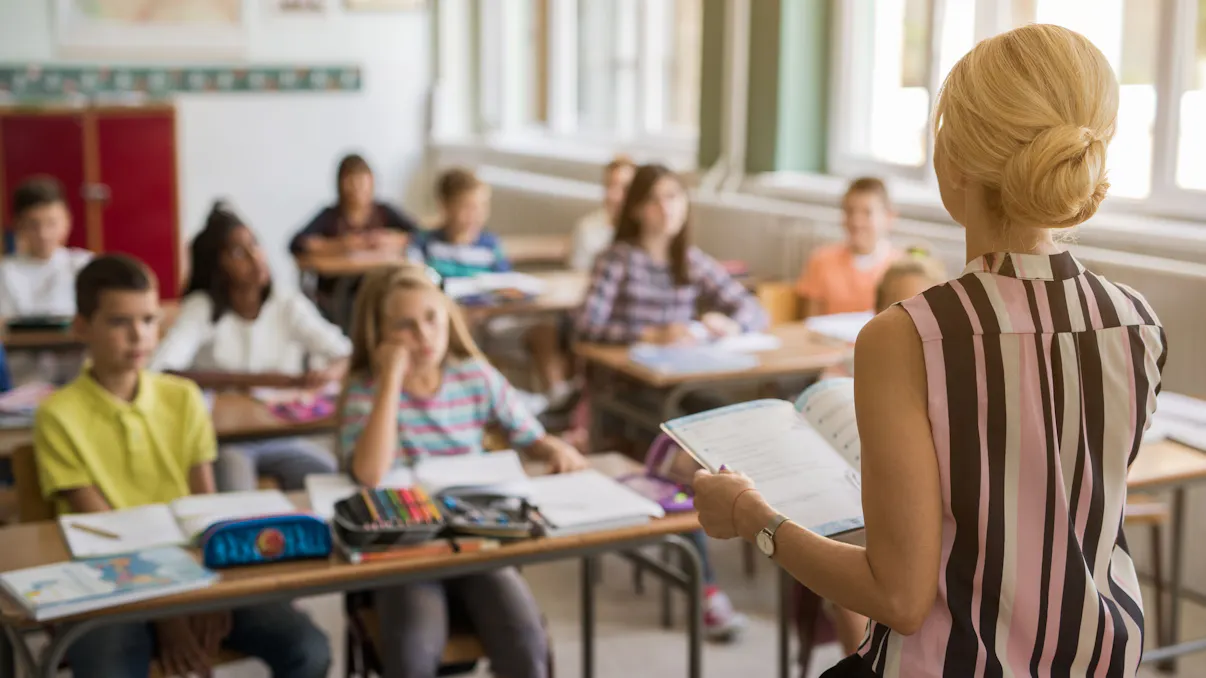
Vienna teacher Susanne Wiesinger has issued another stark warning about Austria’s education system, describing rising violence, smartphone addiction and serious integration problems in her new book. She says teachers increasingly have little time left for actual teaching.
Wiesinger teaches at a Volksschule (primary school) near Vienna’s Reumannplatz. According to her account, only eight of around 250 pupils have no migration background. She says she now spends roughly 70 percent of her working time dealing with conflicts, leaving too little time for lessons.
Her new 192-page book, “Gebt unseren Kindern eine Chance! Was Österreichs Schulen jetzt brauchen” (“Give Our Children a Chance! What Austria’s Schools Need Now”), follows her controversial 2018 book “Kulturkampf im Klassenkampf” (“Culture War in the Classroom”). Wiesinger says she once believed the situation could hardly get worse, but now admits she was wrong.
She also describes growing difficulties in communicating with some parents. According to Wiesinger, contact can be extremely difficult when parents have limited literacy skills. She claims that some children are raised in patriarchal family structures where boys are taught to place themselves above female family members, while older girls may be expected to help raise younger siblings.
Violence among children is another major concern. Wiesinger says she has observed an “enormous willingness to use violence” even among very young pupils, including boys physically attacking one another. She believes violence used as a form of discipline in some families can contribute to the problem and argues that some existing prevention programs fail to reach children effectively.
The teacher also warns about excessive smartphone use. She describes children immediately reaching for their parents’ phones after school and says some pupils may spend hours using devices at home. In one first-grade class, she says, some children initially did not even know how to play with building blocks, instead moving their fingers across them as if they were using a touchscreen.
Wiesinger says schools are also struggling with German and mathematics. She believes the results of existing Deutschförderung (German-language support) are limited and warns that repeatedly making children repeat grades can create significant age differences between pupils in the same classroom. She questions how a 13-year-old feels when placed in a fourth-grade class with much younger children who may even perform better academically.
The teacher points to Denmark as a possible model. She praises its approach of better-paid educators, smaller groups and targeted support for children from as early as age three. In Austria, she believes language support in kindergartens needs improvement and also supports expanding the Caritas Lerncafés, which provide additional educational assistance to children.
Wiesinger is also calling for “Timeout-Klassen” (timeout classes) for particularly disruptive young people. These would place students in specialized small groups until they are ready to return to the regular classroom. Such classes are currently planned in Austria from the 2028/29 school year. She also argues that parents who refuse to cooperate could face financial consequences.
On the question of greater school “Durchmischung” (mixing students from different backgrounds), Wiesinger believes the opportunity has already been lost. She says such a solution might have been possible 15 years ago, but today her conclusion is blunt: “Dieser Zug ist gänzlich abgefahren” — “That train has completely left the station.”