How coalition governments are formed in Austria
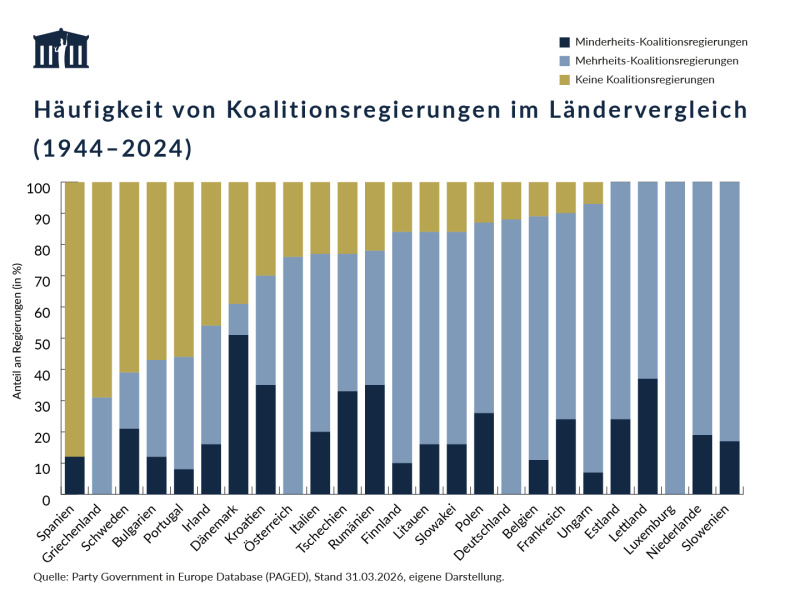
Following the National Council election in Austria, an exciting phase begins for the elected parties: the formation of a government. Since a single party rarely achieves an absolute majority in Austria, two or more parties must usually join together in a coalition in order to govern together.
Coalition research examines exactly why certain parties work together and others do not. In this process, thematic alignment in election manifestos plays a central role. If parties have similar goals in economic, social, or climate policy, the probability of a joint government is higher.
In addition to policy issues, strategic considerations are also important. Parties must weigh which compromises they can make without disappointing their own voters. Furthermore, personal relationships between party leaders and the distribution of ministerial posts play a decisive role in the negotiations.
The Austrian parliament provides the legal and political framework for this. In the coming weeks, party leaders will explore whether stable cooperation is possible through confidential talks. The goal is to form a government that sets a clear political direction for the next five years.
Citizens in Austria follow these negotiations closely. A coalition is always a process of give and take, in which the interests of different voter groups must be balanced. As soon as a coalition agreement is reached, the new government program is presented to the public.