Political crisis in Bolivia and social tensions in Latin America
Bolivia is currently going through one of the most serious social and political crises of recent years. The country faces massive protests and road blockades that have caused a severe shortage of basic products. This situation has generated a climate of great uncertainty throughout the nation.
The government of President Rodrigo Paz, who took office just six months ago, finds itself in a very difficult position. Citizen mobilizations continue to grow and pressure on his administration increases every day, while social sectors demand quick solutions to the country's economic and political problems.
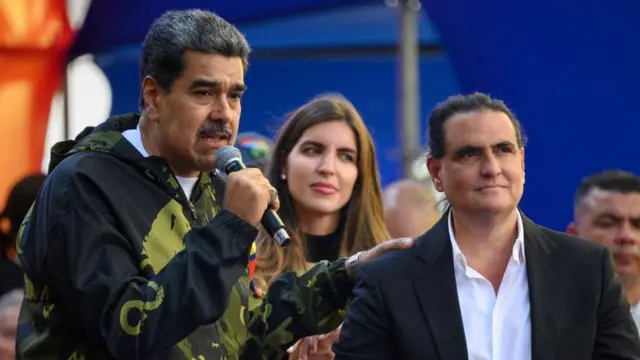
Internationally, the handover of Colombian businessman Alex Saab to United States justice has shaken the geopolitical landscape. Saab is considered a key figure in the Venezuelan government's finances, and his extradition represents a significant change in relations between Caracas and Washington.
Analysts suggest that this move could be a political survival strategy led by Delcy Rodríguez. In this context of a possible "post-Maduro" era, the Venezuelan government's objective seems to be shifting, seeking new ways to maintain power beyond traditional loyalties.
On the other hand, in Chile, there is strong controversy over the "National Reconstruction" bill. The environmental organization FIMA has harshly criticized this government proposal, arguing that the new law could weaken environmental justice and favor questionable economic projects.
The NGO FIMA presented data and figures to debunk the idea that protecting nature is a problem for the economy. According to this organization, environmental protection should not be seen as an obstacle, but as an essential part of any country's sustainable development.
In southern Chile, the Mapuche conflict also remains present on the public agenda. Ernesto Llaitul, representative of the Coordinadora Arauco Malleco (CAM), gave an interview about the "Lautaro Case." Llaitul stated that the Mapuche movement resists state pressure to ensure its own existence and culture.
Finally, the Mapuche leader criticized the use of military and judicial force against his community. According to Llaitul, current investigations do not seek the truth, but rather attempt to incriminate the youth of his movement, who are fighting for the defense of their territory and identity.