Political tensions, economic challenges, and culture: the day's most important news
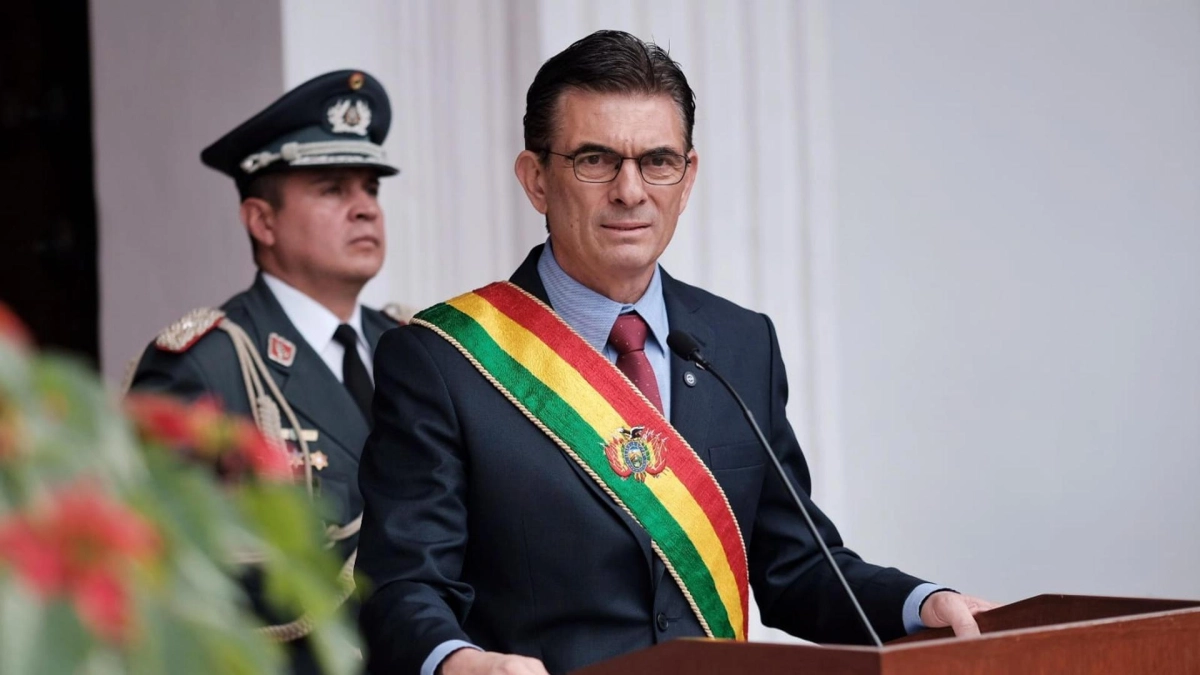
In Bolivia, President Rodrigo Paz has issued an urgent warning, asserting that the country is "almost at the limit" due to intense social protests. Amidst this crisis, the Bolivian Congress decided to eliminate a rule that placed limits on the president's power to decree states of emergency, sparking a heated debate over the control of public order. Meanwhile, in Venezuela, leader Delcy Rodríguez formally requested that the United States and Europe lift sanctions and the economic blockade against her country, stating that Venezuelans do not deserve these measures.
In Colombia's political landscape, President Gustavo Petro's government faces questioning over potential acts for electoral purposes. The Inspector General's Office is investigating recent measures, such as toll reductions and the announcement of the cancellation of traffic camera fines, which are occurring at a decisive stage of the campaign. In this same electoral context, it was revealed that candidate Paloma Valencia has the support of Danny Quirós, a strategist from Costa Rica who seeks to strengthen her path toward the presidential runoff.
Security and misinformation also marked the day. In international waters, a coordinated operation between the United States and the Colombian Navy against a boat carrying suspected drugs resulted in one death and two captures. On the other hand, a piece of fake news about politician Miguel Uribe Londoño was debunked; an image circulating on social media showing a supposed political alliance with Iván Cepeda turned out to be an artificial intelligence creation.
In the business and energy sector, the Gilinski family is consolidating its position as a leader in the Colombian meat market. Through Nutresa brands such as Zenú and Pietrán, this business group dominates beef and pork sales in the country. However, not all economic news is positive, as the Nencol 5 thermal project has sparked the fury of President Petro. Experts question the viability of this plant, which promises to be the largest in Colombia, due to a history of resold projects.
A recent social analysis has focused on civic coexistence. Colombia currently ranks 28th in the global polarization ranking. The report warns of the psychological consequences that ideological intolerance leaves on society, mentioning problems such as information bias and social anxiety that affect Colombians in their daily lives.
To close on a positive note, music and young talent are crossing borders. The singer Shakira has chosen the "Ghetto Kids," a group of child dancers from Uganda, to participate in the 2026 World Cup final. These children, who became famous on social media for dancing barefoot with great energy, will have the opportunity to showcase their talent before millions of people at one of the largest sporting events on the planet.