40,000-year-old mammoth ivory bird figures discovered
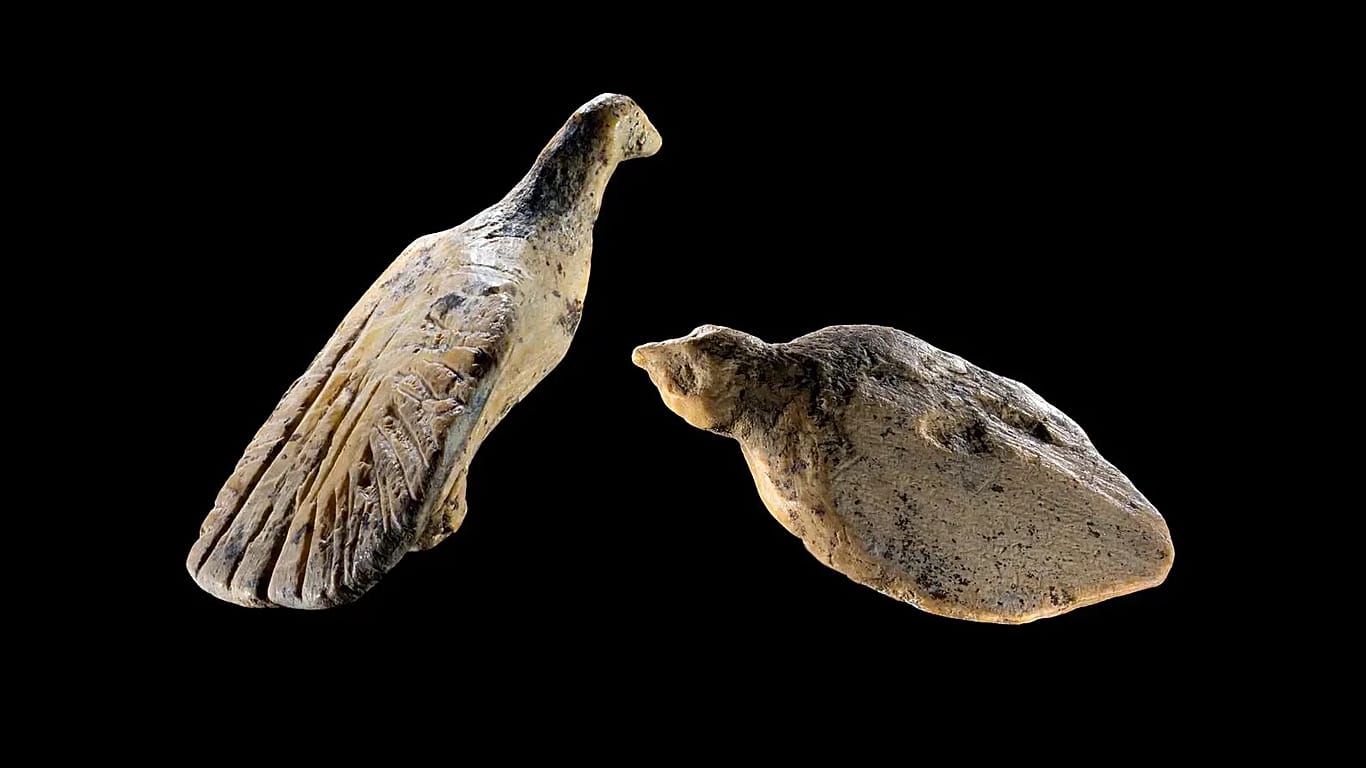
Archaeologists in Germany have discovered two tiny bird sculptures carved from mammoth ivory, dating back around 40,000 years. The remarkable finds provide new evidence of the advanced artistic abilities of Ice Age humans.
The miniature artworks were found in the famous Hohle Fels Cave in southwestern Germany. Each figure is no larger than a human thumbnail, yet researchers say the carvings show extraordinary detail and craftsmanship. The objects were discovered in layers belonging to the Aurignacian period, one of the earliest cultural periods associated with modern humans in Europe.
Researchers believe the figurines represent birds, possibly relatives of the ptarmigan. One carving appears to show a resting bird, while the other depicts a bird with its wings spread, possibly in flight or during courtship. The careful details suggest that ancient artists closely observed animals and were capable of creating highly precise miniature sculptures.
The discovery adds to the growing importance of Hohle Fels Cave, which has already produced some of the world’s oldest examples of symbolic art, including the famous Venus of Hohle Fels and ancient musical instruments. Archaeologists say these findings demonstrate that early humans had complex creative skills and symbolic thinking much earlier than previously believed.
The newly discovered bird figures were found only about 1.5 metres apart during excavations in 2025. Scientists are still studying their exact purpose, but they suggest the objects may have had symbolic, cultural, or ritual significance rather than being simple decorations. The discovery offers another rare glimpse into the imagination and creativity of people who lived during the Ice Age thousands of years ago.