Federal Government calls for stronger protection of EU external borders
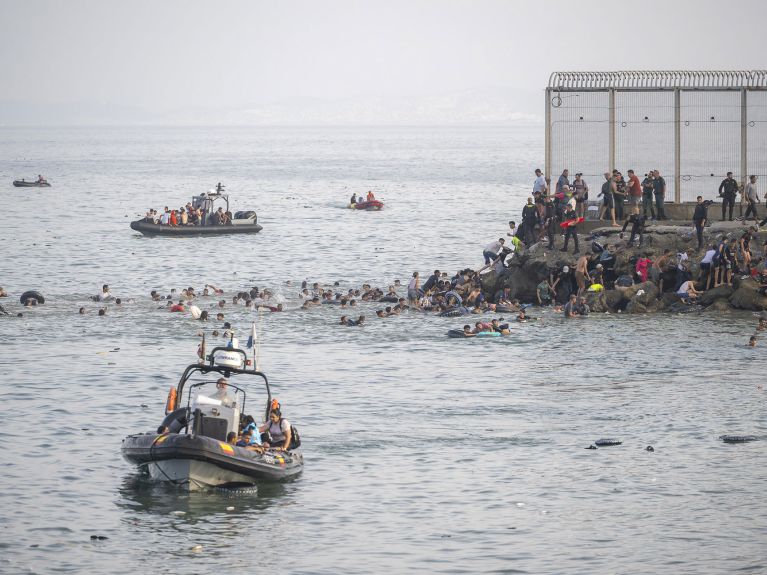
The German federal government is currently increasingly advocating for a reform of European migration policy. The goal is to significantly increase security at the EU's external borders and to better control irregular migration. Federal Interior Minister Nancy Faeser emphasized the importance of a common European solution to ensure stability within the Schengen area.
A central point of the plans is the technical upgrading of border facilities. The federal government supports the use of modern surveillance systems to detect illegal border crossings at an early stage. At the same time, cooperation with countries of origin and transit is to be intensified in order to make the return of persons without a perspective of staying more efficient.
However, critics and various EU partners are debating the implementation of these measures intensively. While some states are calling for stricter isolation, other EU members emphasize the need to continue upholding humanitarian standards and the right to asylum. In this, the federal government is attempting to find a middle ground between effective border security and the adherence to European values.
The debate over EU external borders remains an important topic for German domestic policy. As Germany is considered the main destination country for many migrants, a functioning European border policy has direct effects on the situation in German municipalities. The federal government hopes to reduce the pressure on national reception capacities through uniform rules at the EU level.
In the coming months, further negotiations will take place at the European level to determine the details of the new strategy. It remains to be seen whether the member states can agree on a common approach that both increases security and strengthens European solidarity.