Political Tension: Fidesz Protests Against Tisza Party's Constitutional Amendment
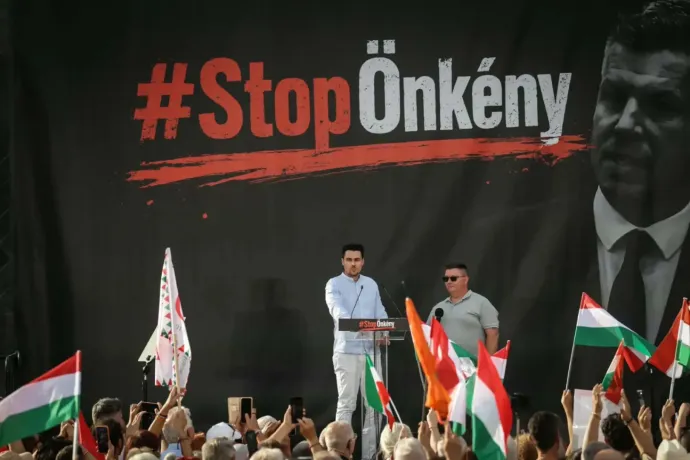
Another significant political debate has emerged in Hungary over the amendment of the Fundamental Law. The Tisza Party recently proposed a change to the constitution, to which Fidesz reacted in an unexpected manner. The governing party organized a protest because, in their view, the planned amendments threaten the Hungarian rule of law.
The Tisza Party's proposal concerns the country's most important law, the Fundamental Law. Although the party claims the changes are necessary to improve democratic functioning, the proposal immediately sparked heated debates in political life. This move signals a new direction in the opposition party's strategy, as it increasingly attempts to shape the legal environment actively.
Fidesz sharply criticized the initiative and expressed its disapproval through a street demonstration. Representatives of the governing party emphasized their concerns for the framework of the rule of law and their desire to protect constitutional stability. This situation is unique in Hungarian politics, as previously it was mostly the opposition that accused the government of unilaterally amending the Fundamental Law.
According to analysts, current events clearly demonstrate the growing competition between the Tisza Party and Fidesz. Both sides are striving to appear before voters as defenders of law and order. The debate is taking place not only in Parliament but also in the public sphere, which further intensifies political tension in the country.
Negotiations regarding the amendment of the Fundamental Law may continue in the coming weeks. It is not yet known whether the proposal will reach a vote or if political protests will halt the process. For Hungarian citizens, the issue is important because the constitution defines the fundamental rules of the state's operation.
Overall, it is evident that Hungarian domestic politics has entered a new phase, where constitutional issues have become central to daily debates. In the coming period, it will be revealed whether the parties are capable of engaging in professional dialogue or if political confrontation will remain the defining factor.