India's Extreme Poverty Falls Sharply, But Free Rations Continue
Published
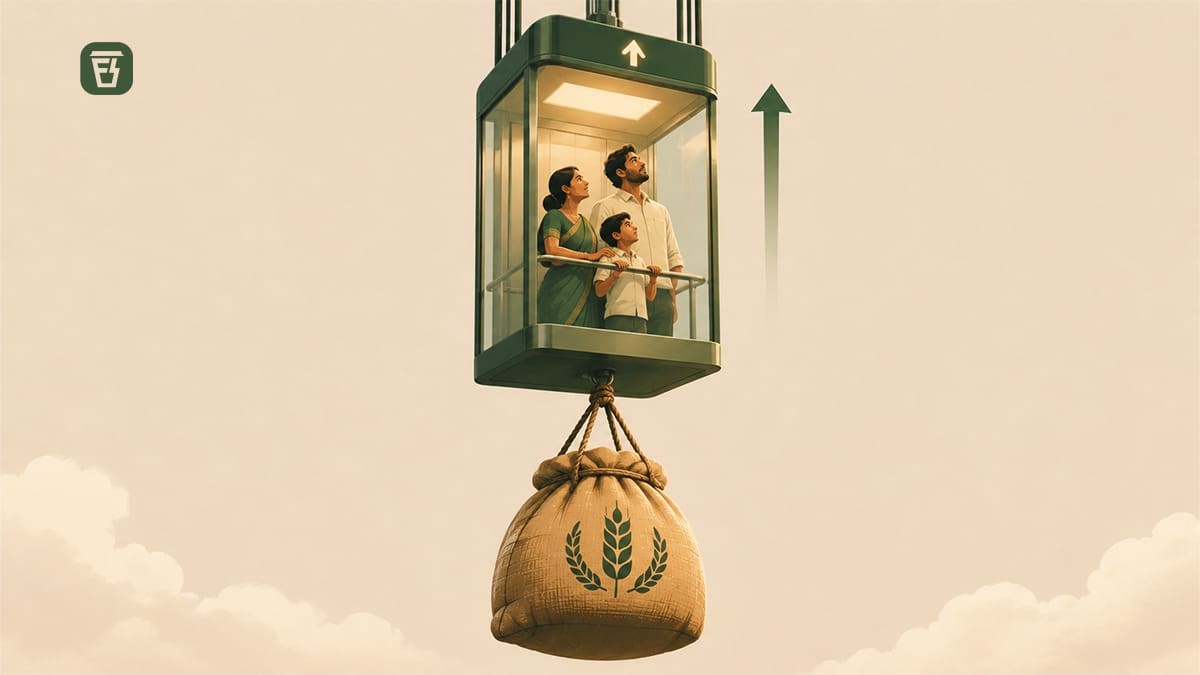
India has seen a major drop in the number of people living in extreme poverty over the past decade. Extreme poverty is defined as living on less than $3 a day. According to the data cited in a recent report, the share of Indians living in this condition fell from 27.1 percent in 2011 to just 2.6 percent in 2023. This change has led many people to ask an important question: if fewer people are poor, why does the government still distribute free food grains?
The free ration scheme gives subsidised or free food, such as wheat and rice, to millions of households across the country. Supporters of the scheme say that poverty numbers measure only a basic level of income, and they do not show the full picture of daily life. Many families still face rising prices, unstable jobs, and limited access to healthy food. For these households, the scheme acts as a safety net that protects them from hunger if their income falls suddenly.
Economists and policy experts have different views on the future of the scheme. Some believe that the government should gradually reduce free rations as incomes rise, and focus on jobs and skills training instead. Others argue that the scheme should continue until more people have secure earnings. The debate is likely to continue as the government considers how to balance support for the poor with the goal of long-term economic growth.
In conclusion, the sharp fall in extreme poverty shows real progress for India over the last twelve years. However, the question of whether free rations should continue remains open. Policymakers will need to decide how to support vulnerable families while encouraging a shift towards stable and independent livelihoods.
Sources: Finshots
More India news
- Elon Musk Plans SpaceX Share Giveaway for US Children Worth Nearly $18 Billion
- US Tourist Visa Applicants Must Prove They Will Return Home
- US Questions India's Manufacturing Schemes While Using Tariffs to Protect Its Own Industry
- US Political Gridlock Likely to Keep Federal Spending and Borrowing High, Report Says
- Trump Says Putin Can Attend US-Hosted G20 Summit, But Doubts He Will Come
- US Trade Office Says Chinese Inputs Give Indian Exporters an Unfair Cost Edge
- IBM Ends Visa Sponsorship for Many Foreign Workers, Leaving Hundreds of Indians Facing Uncertainty
- Major Thanksgiving Storm Disrupts U.S. Holiday Travel and Parades