Weak Rainfall Slows India's Winter Crop Sowing as Food Concerns Grow
Published
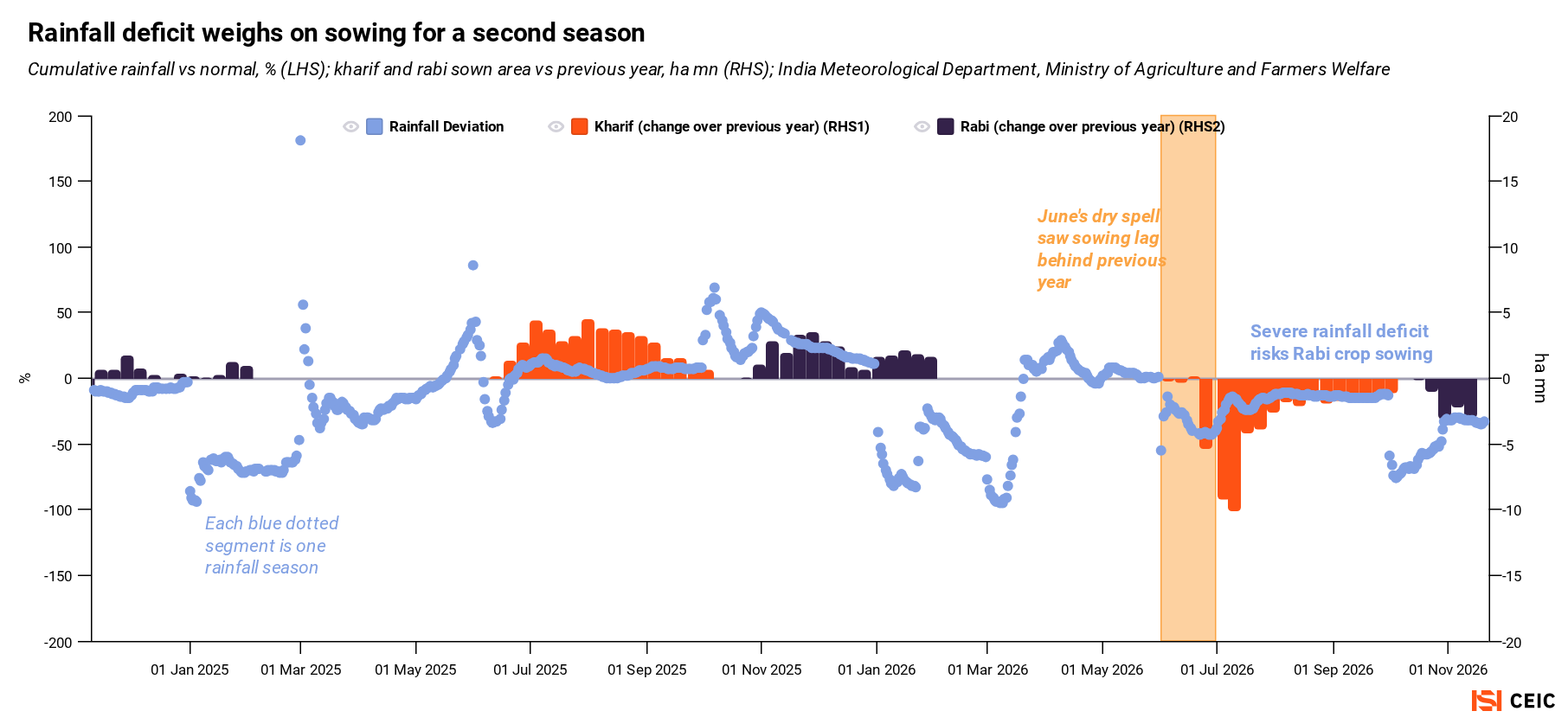
India's winter crop sowing, known as rabi sowing, has started slowly this year. By November 13, farmers had planted seeds on 16.4 million hectares of land. This is about 16 percent less than the area sown at the same point last year. Weak rainfall during the monsoon season is one of the main reasons for the slow start, because many fields still lack enough water.
Rabi crops, such as wheat, mustard and pulses, are planted in the autumn and harvested in the spring. These crops are very important for India's food supply and for the incomes of millions of farmers. When sowing is delayed or reduced, there is a risk that the total harvest will be smaller. A smaller harvest can lead to higher food prices for households across the country.
This development comes at a time when food inflation is rising. Prices of essential items such as vegetables, grains and cooking ingredients have been increasing, which affects family budgets, especially for people with lower incomes. Experts say that the final picture will depend on how much rain falls in the coming weeks and whether farmers can catch up on sowing before the planting period ends.
For now, the government and farmers will need to watch the situation closely. Officials are expected to review crop progress regularly, and consumers may see changes in food prices in the months ahead.
Sources: ISI Markets
More India news
- India Inc Worried About Future Tax Concessions After PM Modi's Criticism
- India Could Face Water Shortage of 54 Billion Cubic Metres by 2050, Report Warns
- India Sees Palm Oil as a Chance to Build More Sustainable Global Trade
- CKC Group and crash.club Combine Jewellery and Entertainment with 'Thursday Bulao'
- Goa Plans Film City to Turn Its Festival Fame into Film Production
- Ramayana Earns Rs 880 Crore in India After 16 Days in Cinemas
- Maharashtra Suspends 23 Food Business Licences and Seizes Stock Worth Rs 2.23 Crore
- India's Inflation Rises to 6.09% in October as Food Prices Climb Faster