Messianism and international politics: a conference to understand global conflicts
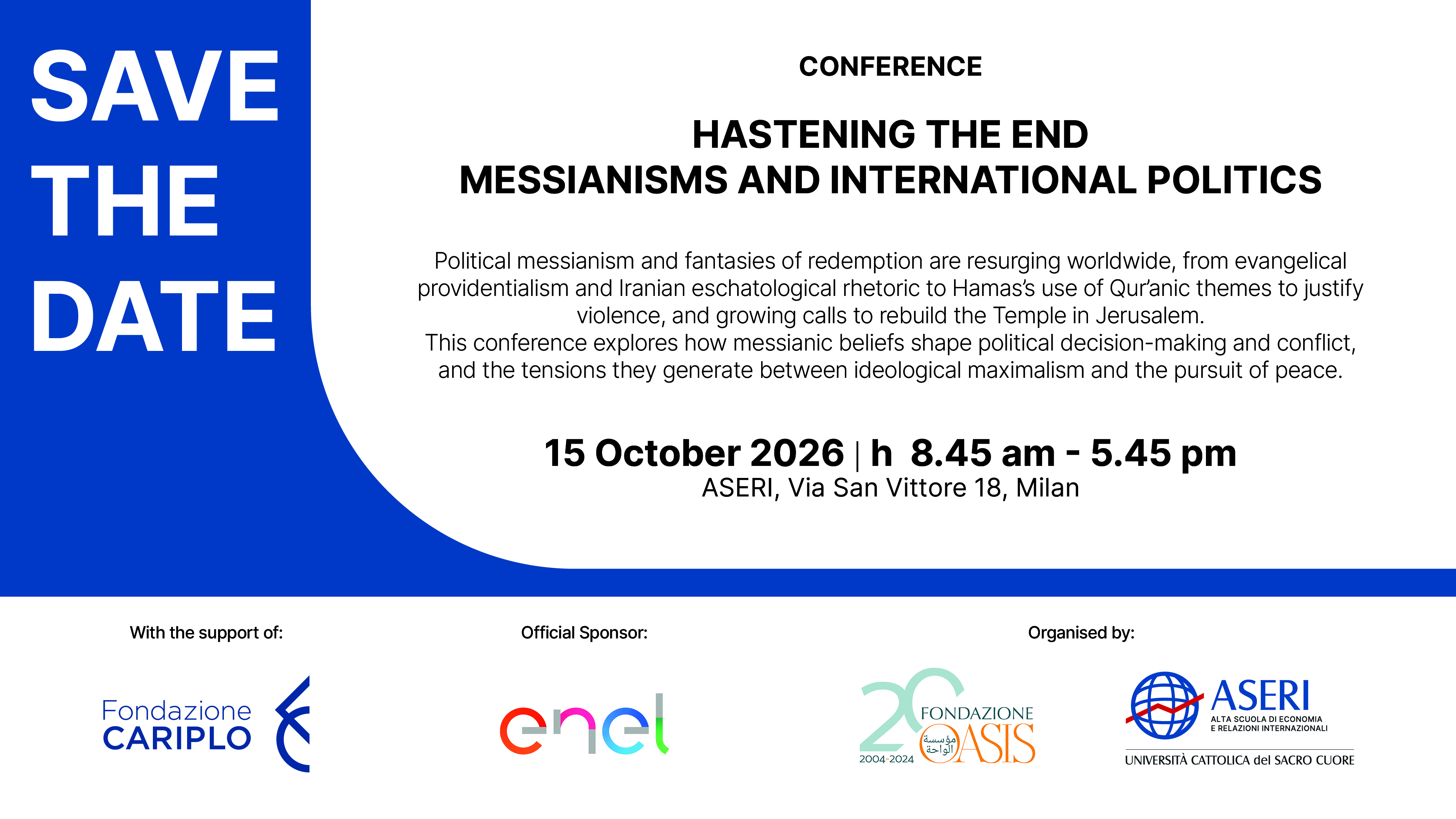
The Oasis International Foundation recently organized an important conference dedicated to the theme of messianism and its impact on the dynamics of international politics. The meeting focused on analyzing how religious beliefs and eschatological visions can influence the decisions of world leaders and guide geopolitical strategies in crisis contexts.
During the proceedings, experts discussed how the concept of "messianism" is not just a theological theme, but an element capable of fueling deep ideological tensions. These visions, which often promise definitive salvation or a radical transformation of society, can become powerful tools in the hands of politics, influencing the way nations manage conflicts and diplomatic relations.
One of the central points of the debate concerned the risk that such ideologies could justify extreme actions, making dialogue between the parties involved more difficult. Scholars emphasized how, in an increasingly interconnected world, understanding these ideological drives is fundamental for anyone who wants to correctly analyze the root causes of contemporary wars and regional instabilities.
The Oasis Foundation's initiative is part of a research path aimed at promoting intercultural dialogue and mutual understanding. Analyzing the link between faith and political power allows one to look beyond the appearances of conflicts, seeking to identify the cultural roots that often escape traditional political analysis.
In conclusion, the conference highlighted the urgency of a critical approach toward the messianic narratives that dominate the global landscape. The ability to distinguish between spiritual aspirations and political instrumentalization remains, today more than ever, a necessary skill for understanding the challenges that await the international community in the near future.