New EU Pact on migration: what changes for Italy
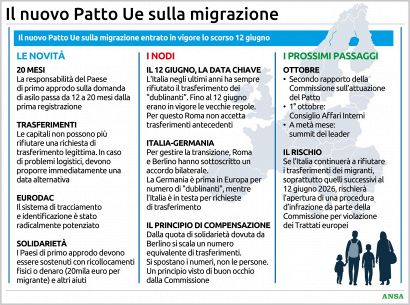
The new European Pact on Migration and Asylum officially entered into force on June 12th. It is a major reform, approved to redesign the rules for managing migratory flows within the European Union, modifying responsibilities and timelines for all member states.
The new regulation introduces faster and more uniform procedures for handling asylum applications at the Union's external borders. The main objective is to make the reception system more efficient, ensuring greater solidarity among European countries in managing migrants arriving by sea or land.
For Italy, the Pact represents a significant challenge. The Italian government will have to adapt its national procedures to the new EU rules. In particular, the issue of transferring migrants between the various member states remains a delicate point, which will require close collaboration with Brussels to avoid bureaucratic or logistical complications.
European authorities have emphasized that these new rules are necessary to address a migration situation that has become increasingly complex in recent years. The success of the Pact will now depend on the ability of each individual state to apply the new rules in a concrete and coordinated manner with other European partners.
In the coming months, the impact of this reform will be closely monitored. The Italian government, together with European institutions, will have to work to ensure that the new procedures respect human rights while, at the same time, ensuring a more orderly management of national borders.