Chinese hawthorn: a natural substance makes mice hungry again
Published
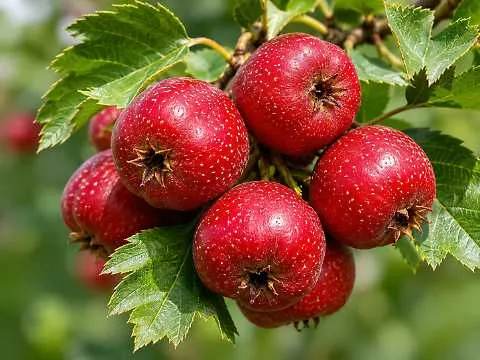
A scientific study has found that a natural substance in the fruit of the Chinese hawthorn can increase the amount of food an animal eats. The study was carried out on mice and concerns the link between the gut and the brain.
According to the available information, the compound acts on the nerve circuits that connect the gut to the brain. These circuits play an important role in controlling appetite, that is, the way the body signals hunger and fullness. In the mice that received the substance, food intake increased compared with normal.
Chinese hawthorn is a plant common in Asia, and its fruit has been used for a long time in traditional medicine and in food. However, the source consulted does not give all the details of the experiment, so it is not possible to know exactly how the full mechanism works.
Animal experiments are a first step in research. The results cannot be applied directly to people, and scientists will need to check whether the same effect also exists in humans. The study could still help us better understand how hunger and appetite work.
Sources: Mondosanità
More Italy news
- The Ideal Zelda Hasn't Come Out Yet: Nintendo Between Two Winning Formulas
- The birth of stars can be heard: NASA data becomes music
- Magnitude 5.0 earthquake off the coast near Los Angeles
- US banks have a trillion dollars at stake in artificial intelligence
- Covid, a new variant pushes up cases: the virus is also circulating in Italy
- HIV: new diagnoses are falling, but the infection is often found too late
- Explosion overnight in Quarticciolo, east Rome: damage to the entrance of a building
- Naples: 14-year-old girl dies after eating a pizza, investigation underway