Why India wants German submarines
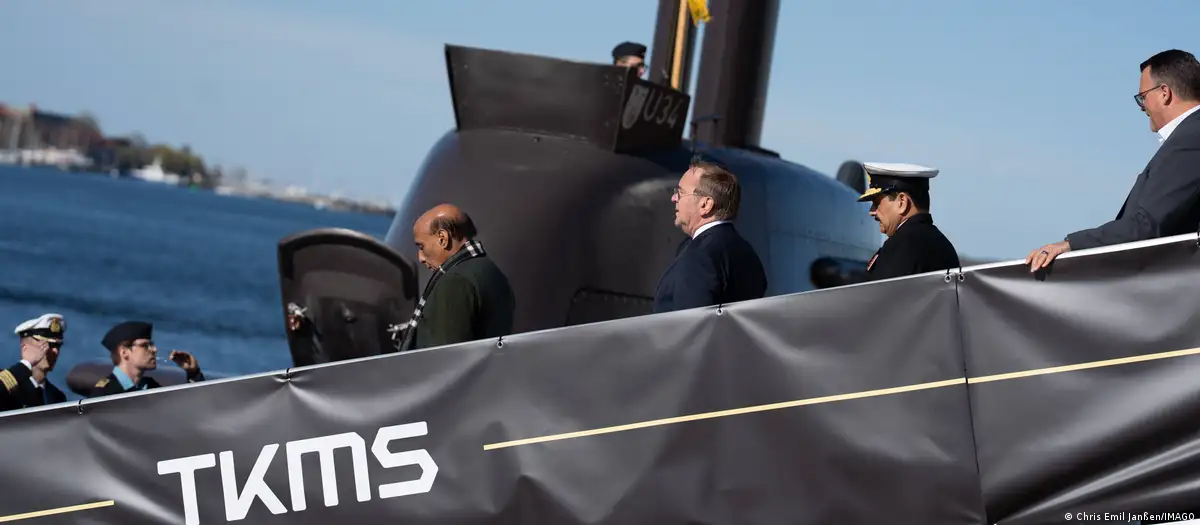
India is close to a major submarine deal with Germany to modernize its navy, in an agreement valued at about $8 billion (€7 billion). German Defense Minister Boris Pistorius said the deal could be signed this summer.
The plan centers on German-designed Type 214 submarines from Thyssenkrupp Marine Systems (TKMS), to be built in India. They are diesel-electric boats, but with a key advantage: air-independent propulsion (AIP).
AIP allows submarines to stay underwater much longer without surfacing to “snorkel,” making them harder to detect and better suited for patrols in busy, shallow waters. This gives them some of the endurance benefits associated with nuclear submarines, without being nuclear-powered.
India’s urgency is rising as the Indo-Pacific becomes more contested. China’s expanding naval reach and Pakistan’s growing military cooperation with Beijing are pushing New Delhi to strengthen deterrence and improve undersea capability.
Sea routes are central to India’s economy, with most trade moving by ship and several Indian Ocean chokepoints vulnerable to disruption. Analysts say quieter, longer-endurance submarines would significantly boost India’s ability to protect these routes.
The deal also involves technology transfer, with Indian engineers expected to build the boats in Mumbai, likely at Mazagon Dock Shipyard, after training from German specialists. However, how much sensitive technology Germany will share remains unclear.
India is also widening defense partnerships beyond Russia—working more with countries like France, Israel, and the United States—though it continues to buy Russian systems. For Germany, the submarine project is both a major commercial opportunity and a strategic step toward a larger Indo-Pacific role.
Even if signed, experts caution the agreement will not make India an exclusive partner of Germany, the EU, or NATO. Still, more submarines in the region could increase patrols and close encounters, raising the risk of miscalculation in an increasingly crowded Indian Ocean.