Wildfire risk is high across the whole country, and the response is still not organised nationally
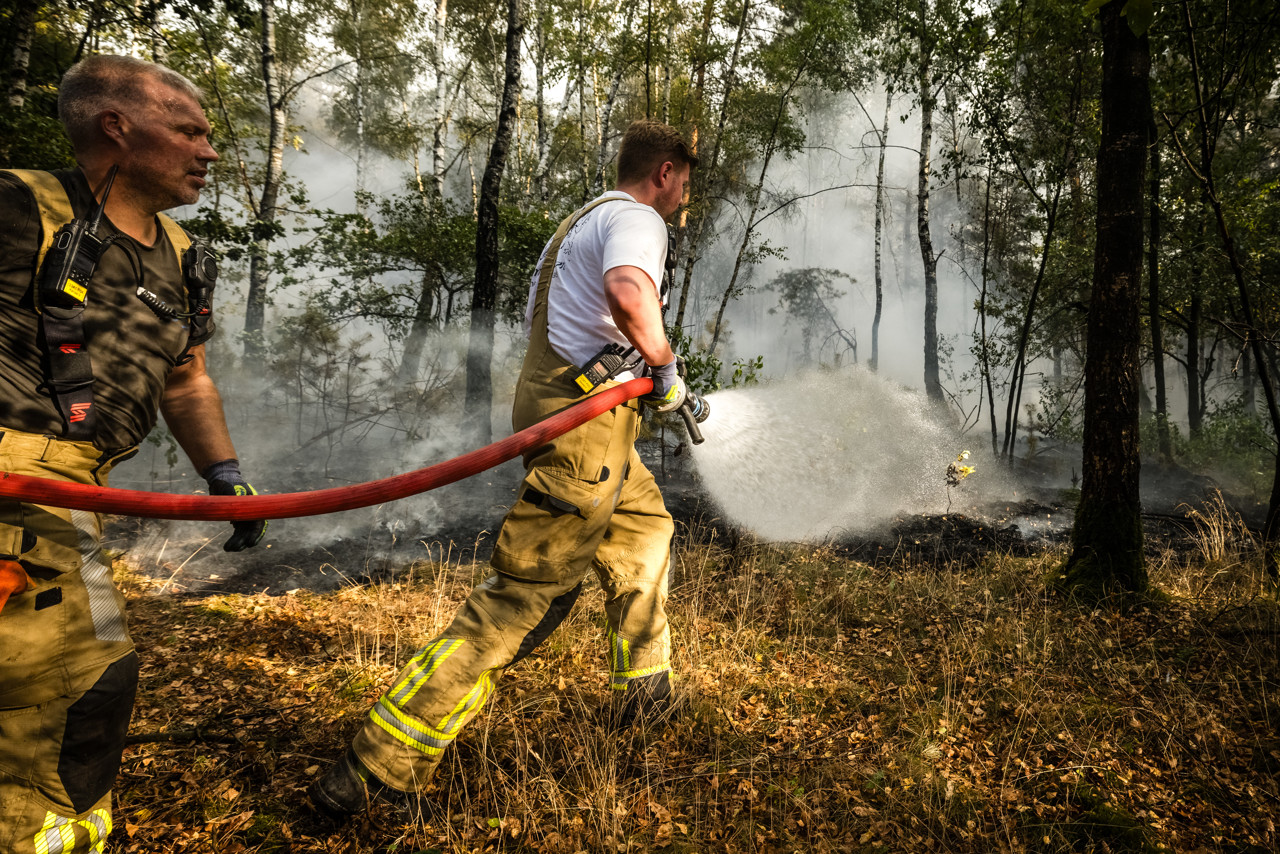
An elevated wildfire risk now applies across the whole of the Netherlands, and last week showed what that means in practice. In the dunes near Ouddorp in South Holland, at least two square kilometres burned - an area equivalent to about 280 football pitches - and a firefighter was injured during the response. Near Venray in Limburg, a fire burned for days across roughly 140 football pitches, and a campsite holding at least 300 holidaymakers had to be evacuated. If you are staying at a campsite or holiday park in a wooded area this summer, this is worth paying attention to: sites in forested areas say they want to be made safer against fire, but nature protection legislation currently stands in the way of some of those measures.
Experts say none of this is a surprise. Jack Mikkers, a member of the Veiligheidsberaad, the body that links all 25 of the country's safety regions, points to climate change as the driver and says the country is now living through a phase that was predicted years ago without having good answers ready. Five years ago specialists were already calling for a national approach. Jelmer Dam, national wildfire control coordinator at Brandweer Nederland, is blunt about what happened at Venray: responsibility is not being taken. There is a national action centre, he says, but it depends on safety regions volunteering to take part, and it has no mandate. The 25 regions largely operate separately from one another.
Mikkers argues the real answer lies in prevention rather than firefighting. Campsites and care homes are often built right up against nature for the view, and evacuating them consumes time and people that would otherwise go into putting the fire out. He also points to how forests are planted: conifers are resinous and help fire spread, and decades of planting them instead of broadleaf trees is a bill the country is now paying. His proposal is a national plan on the scale of the Delta Works, setting out what level of risk the country is willing to accept.
Politically, the ground appears to be shifting. A majority in the Tweede Kamer wants the cabinet to act, according to a survey by RTL Nieuws: Marieke Vellinga-Beemsterboer of D66 says wildfire control cannot be left to chance, Laura Bromet of PRO calls the current approach inadequate and asks for more attention to the causes, CDA member Jan Arie Koorevaar backs national coordination, and VVD members argue for a central approach too. Justice and Security Minister David van Weel says he recognises the question and is discussing it with the Veiligheidsberaad. His ministry says work on a national plan is under way with the safety regions, that several plans are already on the table, and that whether extra capacity can be freed up will be examined in the autumn. Prime Minister Rob Jetten, speaking during the Venray fire, called the concerns justified and said the government would spend the coming weeks listening to what firefighters say they need.