New Research Explores Ways to Improve Synthetic mRNA Protein Production
Published
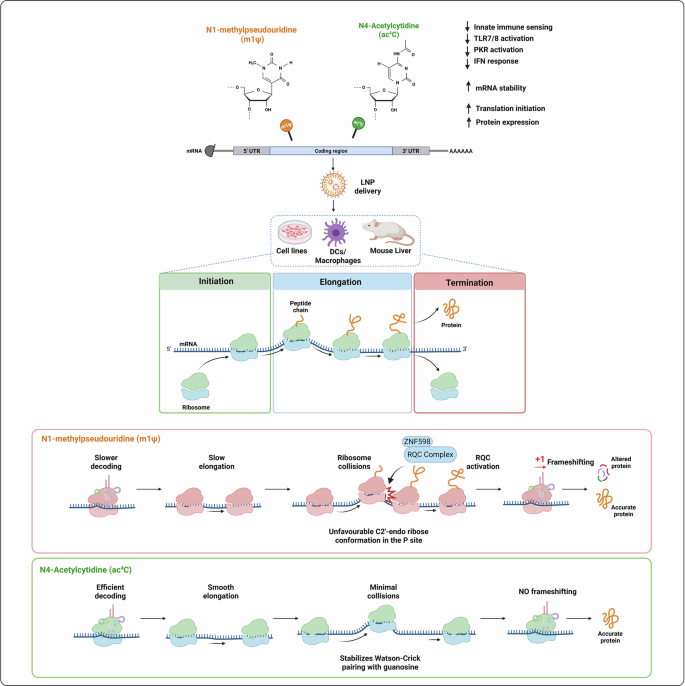
Scientists have published new research on synthetic messenger RNA (mRNA), the genetic material used in some modern medicines and vaccines. The study, published in the journal Nature, looks at a chemical modification called N4-acetylcytidine. This modification is added to synthetic mRNA to change how the molecule behaves inside cells.
The research builds on earlier studies. Scientists have already learned how mRNA that contains a modification called m¹ψ (N1-methylpseudouridine) can avoid being detected by the immune system. This matters because the body normally attacks foreign genetic material. When mRNA is not detected, it can stay active for longer and help cells make the protein it is designed to produce.
The study reports that using N4-acetylcytidine in synthetic mRNA can increase protein yield, which means cells produce more of the target protein. The researchers also say this improvement does not reduce translational fidelity. In simple terms, the protein is still built accurately from the genetic instructions, so the increase in output does not come at the cost of errors.
The work is at an early, scientific stage and is aimed at other researchers. It does not describe any new treatment or product that is available to the public in New Zealand. However, improvements in mRNA technology could influence future medicines and vaccines. Further studies will be needed to test whether these results can be applied in practice.
Sources: Nature
More New Zealand news
- CDC Loses About 30% of Staff, Turns to Outside Journals for Urgent Warnings
- Genetic Research Leads to New Treatment for Rare Blood Disorder
- New Research Suggests Supplement Urolithin A May Help the Brain Get Oxygen
- Scientists Discover World's Oldest Amber Hidden in Chinese Coal
- Singapore Approves New Blood Test for Multi-Cancer Screening
- Scientists Find New Protein That Helps Hepatitis B Infect the Liver
- Rare Eye Nerve Condition Linked to Parvovirus B19 in New Case Report
- Blood Pressure Treatment Can Reduce Heart Risks for People at High Risk