New traffic restrictions in Karachi, an important constitutional ruling by the Supreme Court, and the phased closure of the US Consulate in Peshawar
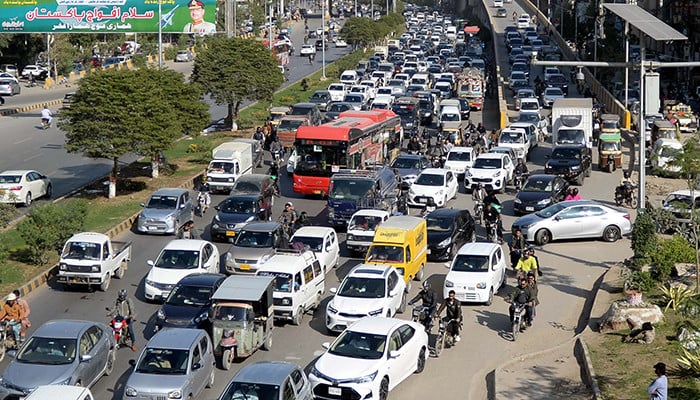
Today’s major news came from Karachi, where a new lane policy is being implemented on Shahrah-e-Faisal to improve traffic flow. According to officials, separate designated lanes will be assigned for motorcycles, buses, and rickshaws, and violators of these instructions will be fined. This decision has been made to reduce the growing traffic pressure on one of the city’s busiest roads.
The aim of this measure is to regulate the movement of different types of vehicles and reduce the risk of accidents. Shahrah-e-Faisal in Karachi carries a heavy volume of vehicles every day, so the administration is hopeful that the new lanes will make travel safer and faster. Officials have also made it clear that the law will be enforced strictly.
The second major news item concerns the Supreme Court, where the court has declared that the jurisdictions of the Supreme Court and the Federal Constitutional Court are separate, and neither institution is subordinate to the other. The court has directed that writ petitions and regular cases be heard in separate forums so that legal proceedings become clearer and more organized.
According to the ruling, writ cases falling under Article 199 of the Constitution will go to the Federal Constitutional Court, while ordinary civil matters and appeal-related cases will proceed under their respective judicial processes. This ruling is being regarded as an important development in terms of the division of powers within the judicial system and clarifying the scope of cases.
The third important piece of news is that the United States has announced the phased closure of its consulate in Peshawar. According to US officials, diplomatic responsibilities in Khyber Pakhtunkhwa will now be transferred to the US Embassy in Islamabad. Despite this announcement, the US has said that there has been no change in its policy priorities regarding Pakistan.
According to the American statement, contact with the government of Khyber Pakhtunkhwa, local institutions, and communities will continue. In other words, despite the closure of the consulate, the US has made it clear that its diplomatic and practical engagement with the province will not end; rather, the administrative structure is being changed.
Thus, today’s news prominently featured urban traffic discipline, clarification of judicial authority, and new arrangements for the US diplomatic presence in Pakistan. All three developments are important in their respective fields, and their practical effects may become clearer in the coming days.