Israel's Knesset advances Netanyahu term limit bill
Published
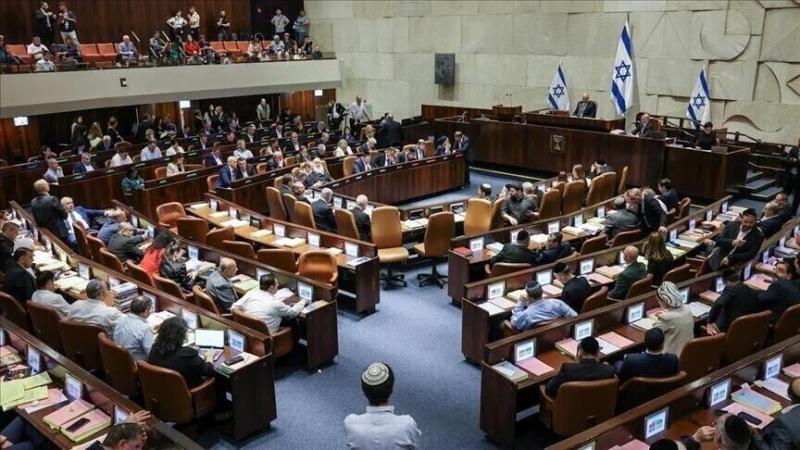
Israel's parliament, the Knesset (الكنيست), has approved bills in a preliminary reading, including an eight-year cap on the prime minister's term. The researcher says the votes do not change Israel's core positions, including its rejection of a Palestinian state. Mohammed al-Qaiq, an Israeli affairs researcher, spoke in an interview published on 25 November 2026.
One bill, which passed its first reading, would strip Knesset members of their parliamentary rights if Hamas is not labelled a terrorist organisation. The researcher says opposition moves often pass at the expense of Palestinians.
A second bill would set up a formal inquiry commission into the failures of 7 October. Al-Qaiq calls the votes political manoeuvres in a struggle over the distribution of power. He says it is too early to speak of the end of the era of Benjamin Netanyahu, the prime minister. Netanyahu still has room to move because of developments in Case 4000, a legal case against him. The charges have practically collapsed, although they have not been legally dropped. Likud, Netanyahu's party, has challenged the results of the election. The interview was first reported by Raya.
The analyst says the results gave a large majority to far-right groups, at the expense of Palestinian rights. He says Gadi Eisenkot continues military and political plans not very different from Netanyahu's approach in Gaza, the West Bank and the wider region. He calls it misleading to treat the dropped bills, such as a ban on returning Palestinian bodies or a ban on the call to prayer, as major shifts. He says Israel's consensus rests on fixed points: rejecting a Palestinian state, refusing withdrawal from Gaza, Syria and Lebanon, requiring recognition of Israel as a Jewish state and treating Palestinians as terrorists.
The bills still need to pass all three readings before they become law. Parties are betting on time, and the deadline set for Gadi Eisenkot could be extended. The researcher says the scene is shaped by deals and party balances more than by a decisive legislative path. According to al-Qaiq, Netanyahu could try to disrupt Eisenkot's moves, win over figures or parties, push for a new election, or escalate and raise doubts about the election process. Netanyahu also sees himself as having a status beyond the prime minister, relying on what he describes as the deep state.
Source: Raya
Sources: Raya
More Palestine news
- Six Palestinian bodies reject new bylaw for private sector council
- Palestinian women's ministry launches support for 1,000 projects
- Israeli strikes kill eight displaced people in Gaza
- Israeli forces detain man and son during olive picking in Bethlehem
- Al-Quds University signs training deal with Cleveland Clinic
- Rights group runs workshop for families of Gaza's missing
- Israeli forces order closure of Jerusalem girls' school
- Nablus media students meet 22 firms for paid training