Nicușor Dan on whether NATO could shoot down Russian drones and missiles over Ukraine
Published
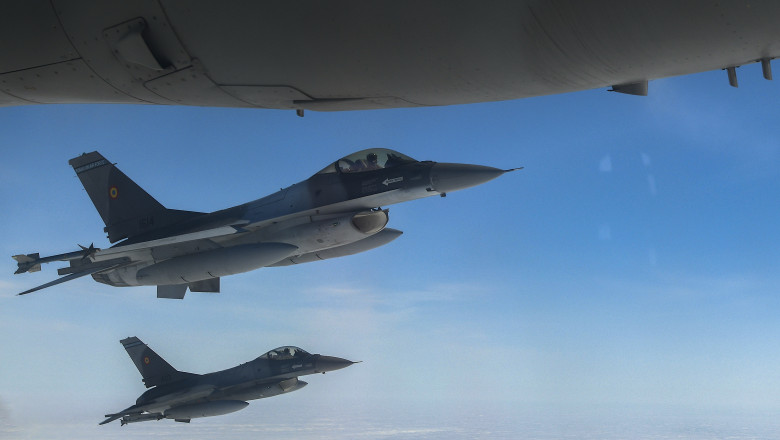
The President of Romania, Nicușor Dan, was asked whether NATO should shoot down Russian drones and missiles that fly over Ukraine. The question shows an important issue for European security, because Russian drone and missile attacks on Ukraine have continued for a long time.
According to information published by Digi24, a NATO intervention in Ukrainian airspace would, in principle, require Kyiv to send warnings to the alliance and to give it access to its airspace. This condition shows that the decision is not simple and that it depends on cooperation between Ukraine and NATO member states.
The issue also has a direct link to Romania. In recent months, Russian drones have entered the airspace of some NATO member states, including Romania, during attacks on ports and cities in southern Ukraine, close to the border with Romania. For this reason, the subject is being followed closely by the authorities in the country, who have strengthened airspace monitoring measures.
For now, the discussion remains at the level of political statements and security analysis. Every decision about using force in the airspace of another country requires consultations between allies and respect for the rules of international law. Following how this issue develops will show whether NATO and Ukraine will reach a joint mechanism to protect airspace.
Sources: Digi24
More Romania news
- Dengue fever cases in Ho Chi Minh City have increased almost fivefold in the last ten years
- Early-stage cancer: why early diagnosis matters
- A 35-year-old man with kidney failure: doctors point to the cause of a harmful habit
- Doctors warn: exercising without preparation can be dangerous
- Scleroderma and lung involvement: why early diagnosis and monitoring are essential
- Vaccines and disease outbreaks: what the situation in 2025 shows
- Depression could be an early sign of Alzheimer's disease
- The surprising link between lithium and Alzheimer's disease, discovered by a Harvard team with a Romanian researcher