EU's Stricter Carbon Regulations: New Challenges and Tasks for Korean Companies
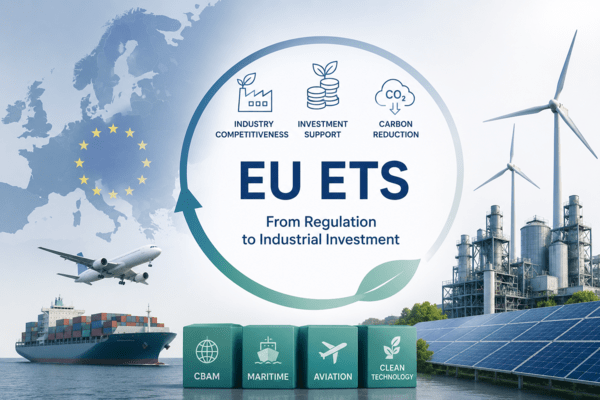
Recently, the European Union (EU) has been further strengthening environmental regulations to reduce carbon emissions. This has become an important factor that determines industrial competitiveness in the global market, going beyond simple environmental protection. These changes are also having a significant impact on Korean companies exporting to the European market.
The European Union has introduced the Carbon Border Adjustment Mechanism (CBAM) to impose costs on products with high carbon emissions. Consequently, Korean companies are facing a situation where they must reduce the carbon emissions generated during the product manufacturing process. In particular, companies dealing with major export items such as steel, automobiles, and batteries are striving to change their production methods to be more eco-friendly.
Furthermore, there is increasing interest in the introduction of humanoid robots in industrial sites recently. While past industrial robots could only perform repetitive tasks at fixed locations, new humanoid robots can move flexibly in environments similar to those of humans and handle various objects. Such technological advancements are expected to help reduce carbon emissions and increase production efficiency.
To respond to Europe's strengthened regulations, Korean companies are increasing their use of eco-friendly energy and accelerating the introduction of smart factories. Technological innovation and compliance with environmental policies have now become essential strategies for survival, not just choices.
Moving forward, for Korean companies to maintain their competitiveness in the global market, they must actively utilize advanced technologies such as robotics alongside the development of technologies for carbon neutrality. Attention is focused on how the government and companies will cooperate to respond to these changes.