News of US-Iran Peace Agreement and the Shifting Global Economic and Technology Markets
News has emerged that the United States and Iran have reached a tentative agreement on a Memorandum of Understanding (MOU) to end the war. Following this news, all three major indices on the New York Stock Exchange rose, closing higher. Reports indicate that the two countries agreed on the terms several days ago, but both sides are currently delaying the final confirmation and official announcement.
U.S. Treasury Secretary Scott Bessent commented on the agreement with Iran, stating that the unfreezing of Iranian assets and the easing of sanctions will proceed slowly. He also emphasized the safety of maritime passages, adding that Oman has confirmed it has no plans to impose tolls on the Strait of Hormuz. Meanwhile, interest in safe-haven assets grew following the news of the peace agreement, causing international gold prices to rise by more than 1%, rebounding for the first time in four days.
There was also surprising news in the artificial intelligence (AI) industry. The corporate value of Anthropic, an American generative AI company, approached $1 trillion, surpassing OpenAI, which had previously held the top spot in the industry. This is the highest valuation ever recognized for an AI startup worldwide, clearly demonstrating the intense competition within the AI market.
South Korean technology companies are also targeting niches in the global AI market. CertiSilicon, a company specializing in AI infrastructure, announced that it is entering the Chinese AI market in partnership with ThetaOn. They plan to provide an optimization platform that increases the energy efficiency of data centers to address the power shortages and component scarcities currently facing China.
In the U.S. financial market, the Treasury bond auction proceeded stably. As investor demand surged for the 7-year Treasury notes issued by the U.S. Department of the Treasury, yields were determined to be lower than market expectations. In particular, the allocation ratio for foreign investors reached its highest level since the end of 2024, demonstrating high confidence in U.S. Treasuries.
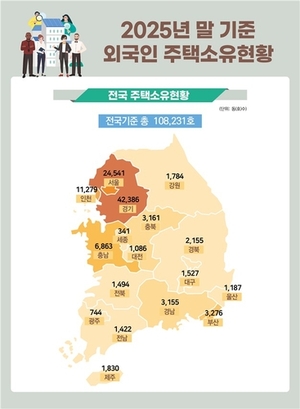
In the South Korean real estate market, residential transactions by foreigners have significantly decreased. As the government designated major areas of the Seoul metropolitan area as Land Transaction Permit Zones, the volume of foreign residential transactions in Seoul plummeted by 44%. Currently, foreigners own approximately 108,000 homes in Korea, with Chinese nationals accounting for the largest share, owning more than 60,000 units.
Conversely, total housing transaction volume in the metropolitan area showed a temporary increase last April. Home sales in the metropolitan area rose by 6.8% compared to the previous month, with Seoul specifically seeing a 15.8% increase. This is analyzed to be the result of a large volume of properties hitting the market as owners sought to avoid the tax burden ahead of the implementation of heavy capital gains taxes on multi-homeowners.