Google Begins Demonstration of 'Project Suncatcher' to Build AI Data Centers in Space
With the rapid advancement of artificial intelligence (AI) technology, the power consumption of data centers has emerged as a significant challenge. In this context, Google is garnering significant attention for its new initiative, 'Project Suncatcher,' which aims to build AI data centers in outer space.
Through this project, Google is developing technology to operate data centers by directly harvesting solar energy in space. While obtaining power on Earth requires substantial resources, space offers the advantage of a stable, 24-hour supply of solar energy.
Google has now initiated the first in-orbit demonstration of Project Suncatcher. This marks an important transition from theoretical research to verifying whether data center operations are actually feasible in a space environment. If this experiment succeeds, it is expected to be a major help in solving the power issues required for the future AI industry.
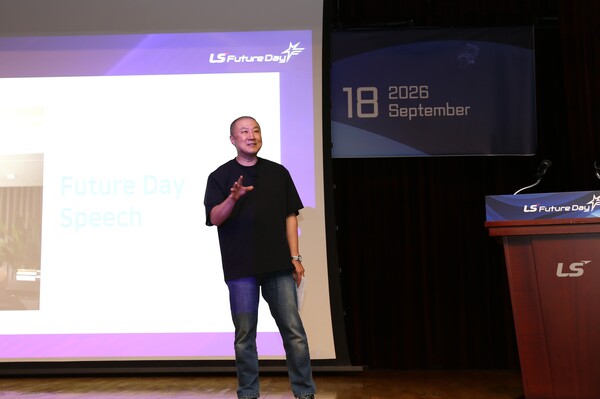
Meanwhile, domestic companies are also continuing to make large-scale investments in preparation for the AI era. LS Group Chairman Koo Ja-eun announced that the company would invest approximately $36 billion in the power infrastructure sector, which is core to the AI industry. This is interpreted as a proactive strategy to address the rising power demand resulting from the expansion of AI data centers.
In conclusion, both Google's space data center experiment and the large-scale power infrastructure investments by domestic companies are efforts to enhance 'energy efficiency,' which is key to the AI era. Attention is focused on how these technological advancements will transform our daily lives and industrial landscapes in the future.