Domestic Banks' Q1 Capital Ratios Fall Due to Rising Exchange Rates and Increased Lending
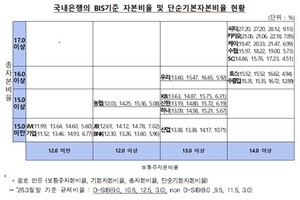
The BIS capital ratio, an indicator of the capital soundness of domestic banks, fell in the first quarter of this year. According to the Financial Supervisory Service, the total BIS capital ratio of domestic banks as of the end of March was 15.64%. This figure is slightly lower compared to the end of last year.
The BIS ratio is calculated by dividing a bank's capital by its risk-weighted assets. A higher ratio means the bank has a greater ability to withstand unexpected losses on its own. Therefore, it is used internationally as a very important standard for evaluating a bank's stability.
The main reasons for the decline in capital ratios this time are the increase in loan assets and the rise in exchange rates. First, as the money banks lent to corporations and households increased, the scale of risk-weighted assets that need to be managed grew. This is because more lending increases the risk factors from the bank's perspective.
Additionally, as the KRW/USD exchange rate rose, the value of foreign currency assets became larger when calculated in Korean won. When the exchange rate rises, the KRW-converted amount of dollar-denominated assets held by banks increases, which consequently has the effect of making the scale of risk-weighted assets appear larger than it actually is.
It is analyzed that the overall ratio declined because the speed at which risk-weighted assets increased was faster than the speed at which the banks' profits or capital increased. However, the current capital ratios of domestic banks still significantly exceed legal regulatory standards, so there are no major issues with the stability of the financial system.
Financial authorities plan to continue closely monitoring changes in the external economic environment, such as exchange rate fluctuations. They also plan to continuously conduct inspections to ensure that banks maintain sufficient capital and operate stably even in the event of unexpected economic crises.