Debate in Spain over the legality of extremist organizations
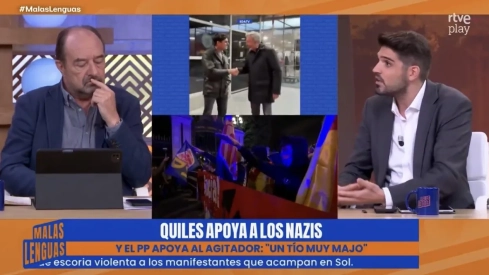
The Spanish political landscape has once again focused its attention on the legality of radical groups. Recently, journalist Hugo Pereira expressed his firm rejection of the organization known as 'Núcleo Nacional', labeling it a group with a neo-Nazi ideology. During his appearance on the program 'Malas Lenguas', Pereira openly questioned why these types of organizations are allowed to operate legally in the country.
The debate arises following the group's increasing visibility in various demonstrations and on social media. According to the journalist, the existence of these groups represents a challenge to democratic values and peaceful coexistence in Spain. His statements have generated diverse reactions in the media sphere, reopening the discussion on the limits of freedom of expression and association within the Spanish constitutional framework.
For their part, authorities and constitutional law experts are constantly analyzing the activities of extremist groups. Spanish law establishes mechanisms to ban associations that promote hatred, violence, or discrimination. However, the process to outlaw an organization is complex and requires solid evidence that its actions violate the fundamental rights enshrined in the Constitution.
This case highlights the constant tension between the protection of individual liberties and public safety. While civil society debates the influence of these groups, the focus remains on how institutions should act in the face of discourse that deviates from democratic principles. The question of whether it is necessary to tighten current regulations remains an open topic on the Spanish public agenda.