WMO warns El Niño may keep strengthening in 2026, with effects possibly lasting into 2027
Published
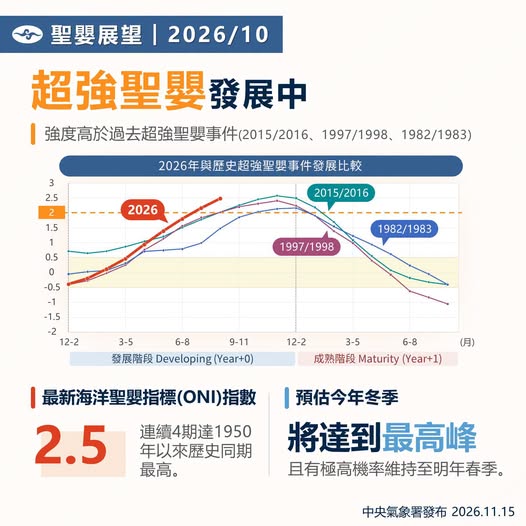
The World Meteorological Organization (WMO) has warned that El Niño will keep getting stronger in 2026. The WMO says it cannot rule out that it will develop into a very strong El Niño event, which is commonly called a "super El Niño".
El Niño is a climate pattern in which the sea temperature near the equator in the Pacific Ocean is higher than usual. It affects weather around the world, for example how much rain falls and how high or low temperatures are. The WMO points out that these climate effects could continue until 2027, so every region needs to prepare early.
Taiwan's Central Weather Administration under the Ministry of Transportation and Communications has set up a "2026/2027 Super El Niño Zone". Its purpose is to help the public understand how El Niño is developing and what effects it may have on Taiwan. People can use this zone to check the latest information and explanations.
In short, the WMO advises that the El Niño of 2026 may become stronger, and its effects may continue into the following year. The situation is still being watched closely, so the public should keep checking the latest information from the Weather Administration and other official bodies.
Sources: 交通部中央氣象署
More Taiwan news
- Shuri Castle in Okinawa Reopens After Reconstruction; Taiwan Invited, China Objects and Stays Away
- Deputy Premier Confident Taiwan Can Keep 15% Tariff Rate
- A 57-year-old man refused hospital care and nearly died; ECMO saved his life from acute myocarditis
- Another Bird Flu Death Reported in the United States: H5N1 Spreads from Dairy Cows to Humans, but Risk of Human-to-Human Spread Remains Low
- Can a New Immune Cell Therapy Remove a Deadly Brain Tumour and Prevent It from Coming Back?
- How many hours of sleep is healthiest? The link between sleep, dementia prevention and anti-ageing
- US Study Finds Key Protein in Disc Degeneration, Possibly a New Direction for Treatment
- GLP-1 Weight-Loss Drugs May Help Lower Heart Risks for People with Severe Mental Illness