Exploring Taiwan's Social Pulse: Diverse Observations from Legal Tech to Life in the Harbor City
Taiwan's assisted reproductive technology has been developing for many years, and recent discussions regarding amendments to the "Artificial Reproduction Act" have once again drawn attention. This law involves not only technology-assisted pregnancy but also symbolizes the evolution of reproductive freedom and biopolitics. From the birth of the first IVF baby in 1985 to the present, this issue reflects society's ongoing dialogue regarding the definition of family and reproductive rights.
In the era of global digitalization, fiber optic cables buried deep under the sea have become the "digital lifeblood" of modern society. Experts point out that who owns, lays, and determines the path of these cables has become a core issue of geopolitics. The security and layout of subsea cables directly affect the network stability and information sovereignty of various countries, serving as an indispensable infrastructure behind modern technology.
Returning to daily life, Kaohsiung Station recently held the 11th Railway Bento Festival, attracting many participants. This event combines public transportation with local cuisine and is seen as a "renaissance of the taste buds." When promoting such social changes or public construction, ideal designs often require "wise compromises" from all parties. Although compromise may leave no party completely satisfied, it is the most ideal and acceptable solution for driving change in the real world.
Beyond social systems and technology, people have also begun to rethink "what constitutes a good life." In addition to pursuing material achievements, finding inner balance and the meaning of life is a lifelong learning task for many. This reflection on life is also reflected in the transformation of retired men; many elders begin to "retake the course of life" after retirement, learning how to take the bus, understand route maps and real-time updates, and rebuild their connection with society.
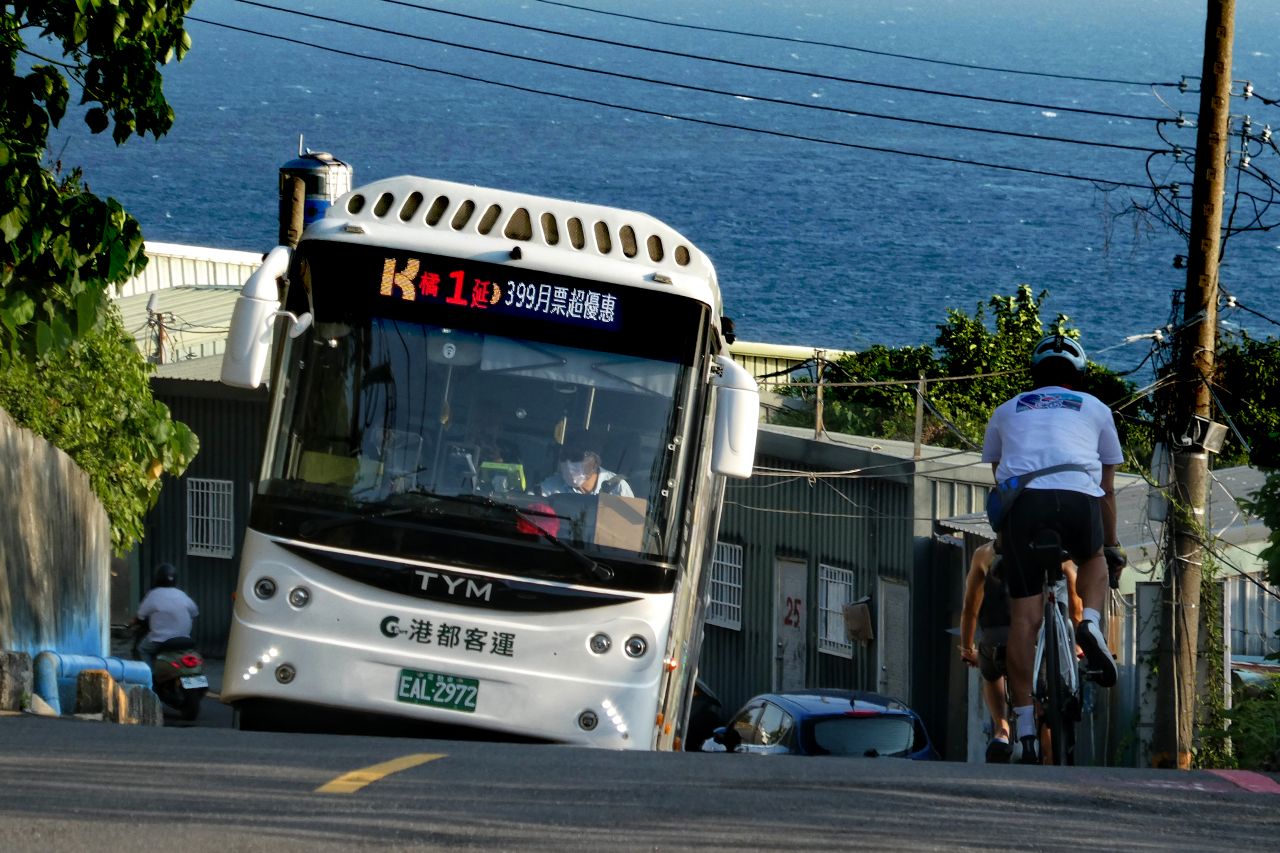
On the streets of Kaohsiung, public transportation is not just a tool for movement but also a window for observing society. The "Orange 1 Extension" route of the Harbor Bus allows passengers to ascend Shoushan (Chai Mountain) from the city center in just twenty minutes to enjoy the beautiful mountain and sea views and rich ecology. However, taking the bus also requires attention to safety. Experts remind passengers to "pause, look right, and then step out" when getting off to avoid being hit by motorcycles weaving through the right side of the bus—an essential safety tip for Taiwanese commuters.
Through the bus window, we can see various faces of the contemporary era, such as foreign travelers waiting for the bus or strangers crossing our paths. On the streets of Kaohsiung at noon, one can also see heartwarming scenes of a mother resting in the shade with her young child on a bicycle. These subtle observations remind us that sometimes, only by slowing down can we see the world more deeply and experience the ordinary yet true beauty of life.