Inequality is elementary to Germany's school system
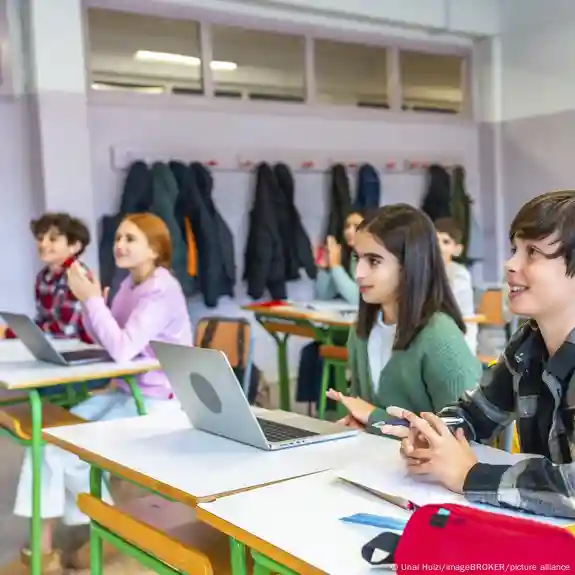
A new education report warns that children’s future in Germany is often shaped before they even enter kindergarten.
The report highlights deep inequality in Germany’s education system, showing that a child’s success is strongly linked to family income and parents’ education level. Experts say the **Bildungslücke (education gap / learning gap)** begins at birth, widens by age six, and often continues throughout school.
At the center of this debate is **Kettelerschule**, a primary school in Bonn that has become a rare success story. Most of its 250 students come from migrant families, many do not speak German at home, and one in three requires extra support. Despite these challenges, the school consistently performs above average in **Nordrhein-Westfalen (North Rhine-Westphalia)**.
A major reason for this turnaround is principal Christiane Lang-Winter, who transformed the school’s teaching model after joining in 2004. She introduced **Lernfamilien (learning families / mixed-age learning groups)**, where children of different ages study together and support each other. The school also focuses heavily on language development and early reading skills, especially for young children.
According to a UNICEF study, Germany ranks only 20th out of 43 developed countries in math and reading performance among 15-year-olds. Students from disadvantaged backgrounds are five times more likely to fail minimum reading standards, while the percentage of young people leaving school without a diploma has risen to 8%.
Education experts argue Germany’s school system is outdated and reinforces social inequality instead of reducing it. Critics say political debate focuses too much on issues like smartphone bans rather than meaningful reform. While Education Minister Karin Prien plans to introduce nationwide standards, many believe Germany still lacks a serious national discussion about how to provide equal opportunities for every child.