New Review Examines Heart Failure Linked to Obesity and Diabetes
Published
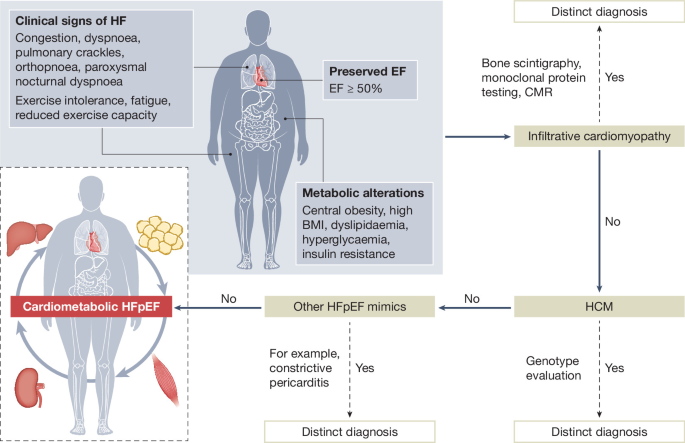
A new review published in the journal Nature looks at a type of heart failure that is closely linked to metabolic conditions such as obesity, type 2 diabetes and high blood pressure. The condition is known as cardiometabolic heart failure with preserved ejection fraction, or HFpEF. In this type of heart failure, the heart still pumps blood in a normal way, but the heart muscle becomes stiff and does not fill with blood properly. This makes it harder for the heart to supply the body with the oxygen and energy it needs.
The authors explain that the number of people diagnosed with this condition has changed over time. Doctors now see it more often in patients who have metabolic problems, and the review describes how these changes in patient groups have affected the way researchers understand the disease. The authors also discuss the biological processes that may cause the heart to become stiff. These processes include inflammation and changes in how the body uses sugar and fat. Understanding these processes is important because they may help explain why some patients become seriously ill while others do not.
The review also describes the treatments currently being developed for this condition. For many years, doctors had fewer effective medicines for HFpEF than for other forms of heart failure. The authors describe a growing range of possible therapies, many of which focus on the metabolic problems that contribute to the disease. Researchers hope that these new approaches will improve the quality of life of patients and reduce the number of hospital visits. Further clinical studies will be needed to confirm how well these treatments work over the long term.
Heart failure affects many people in the United Kingdom, and the rise in obesity and type 2 diabetes means that metabolic heart conditions may become more common in the future. Patients who have symptoms such as breathlessness, tiredness or swelling in the legs are advised to speak to their GP. The review shows that scientists are paying increasing attention to the link between metabolism and heart health, and it suggests that future care may depend on treating these conditions together.
Sources: Nature
More United Kingdom news
- Microchip Tensions Between US and China Could Affect UK Christmas Prices
- Democrats Win Down-Ballot Races in US Midterms and Shift the Balance of Power
- Study Tests 55 Designs to Build Public Support for Carbon Pricing
- Eleven US States Ban AR-Style Rifles: What Is the Debate About?
- Nvidia Sellers Look for New Buyers as US Limits China's Access to AI Chips
- European Arms Makers Race to Reduce Reliance on China and the US
- Rising Food Prices Force Many Americans to Cut Back on Thanksgiving
- Ballymena-Born Founding Father James McHenry Honoured for His Role in America's Creation