Why Germany's Futuristic Maglev Train Failed
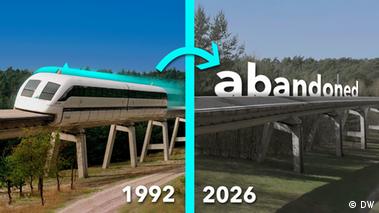
Germany’s Transrapid maglev train promised ultra-fast travel at 450 km/h but never reached commercial success. Despite advanced engineering and major ambitions, the project collapsed due to high costs, competition, and a fatal 2006 accident that damaged public confidence.
The Transrapid system was designed as a revolutionary magnetic levitation train that floated above its track, eliminating wheel friction and enabling extremely high speeds. German engineers envisioned it connecting major cities in minutes, showcasing a new era of transport innovation led by cutting-edge technology.
However, the project struggled to move beyond testing due to soaring construction costs and a lack of political consensus. At the same time, Germany continued to invest in its conventional high-speed ICE rail network, which was cheaper to expand and already well integrated into existing infrastructure.
A major setback occurred in 2006 on the Emsland test track in northern Germany, when a Transrapid train collided with a maintenance vehicle carrying workers. The accident killed 23 people and severely damaged the project’s reputation, raising serious safety concerns among the public and decision-makers.
Today, the Transrapid system remains a symbol of unrealised ambition. Its abandoned test track stands as a reminder of how even groundbreaking technology can fail when financial, political, and safety challenges outweigh its promise.