New Study Maps Genes Linked to Coronary Artery Disease
Published
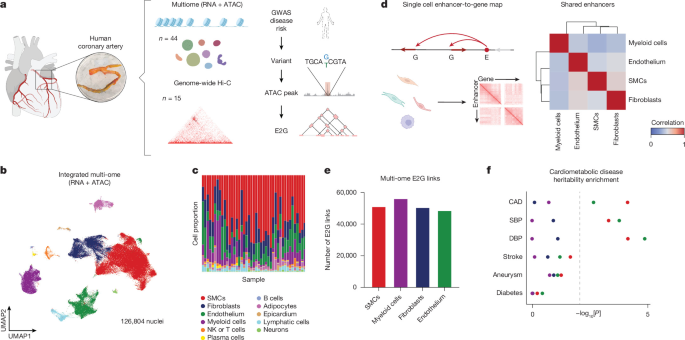
Scientists have published a new study that looks closely at how genes work in the heart's blood vessels. Coronary artery disease is a condition in which the arteries that supply blood to the heart become narrowed or blocked. It is one of the main causes of illness and death in many countries, including New Zealand.
The research team, whose work appears in the journal Nature, studied human coronary arteries from 44 people. They used a method called single-nucleus multi-omic profiling. This means they measured two things inside individual cell nuclei: which genes were active, and which parts of the DNA were open and accessible. By looking at single cells, the researchers could see differences between cell types that are often hidden when tissue is studied as a whole.
The researchers focused on how genetic variants, which are small differences in DNA, may connect to specific regions that control genes, known as enhancers, and then to the genes they affect. This kind of map, sometimes described as a variant-to-enhancer-to-gene map, helps scientists understand where and how genetic risk for disease may act in the body. Such knowledge can guide future research into the causes of the condition and the search for new treatments.
The study is a basic research project, so it does not offer an immediate change to patient care. However, it provides a detailed resource that other scientists can use to test ideas and explore possible targets for therapy. Further studies will be needed to confirm the findings and to understand how they may apply to people in different populations, including those in New Zealand.
Sources: Nature
More New Zealand news
- CDC Loses About 30% of Staff, Turns to Outside Journals for Urgent Warnings
- Genetic Research Leads to New Treatment for Rare Blood Disorder
- New Research Suggests Supplement Urolithin A May Help the Brain Get Oxygen
- Scientists Discover World's Oldest Amber Hidden in Chinese Coal
- Singapore Approves New Blood Test for Multi-Cancer Screening
- Scientists Find New Protein That Helps Hepatitis B Infect the Liver
- New Research Explores Ways to Improve Synthetic mRNA Protein Production
- Rare Eye Nerve Condition Linked to Parvovirus B19 in New Case Report